Asia Markets Rally as Yen Surges, Iran Risk Fades, Chips Rebound
Asian equities climbed Friday as semiconductor stocks rebounded, the yen strengthened on pension-flow signals, and easing Iran-US tensions kept oil calm.
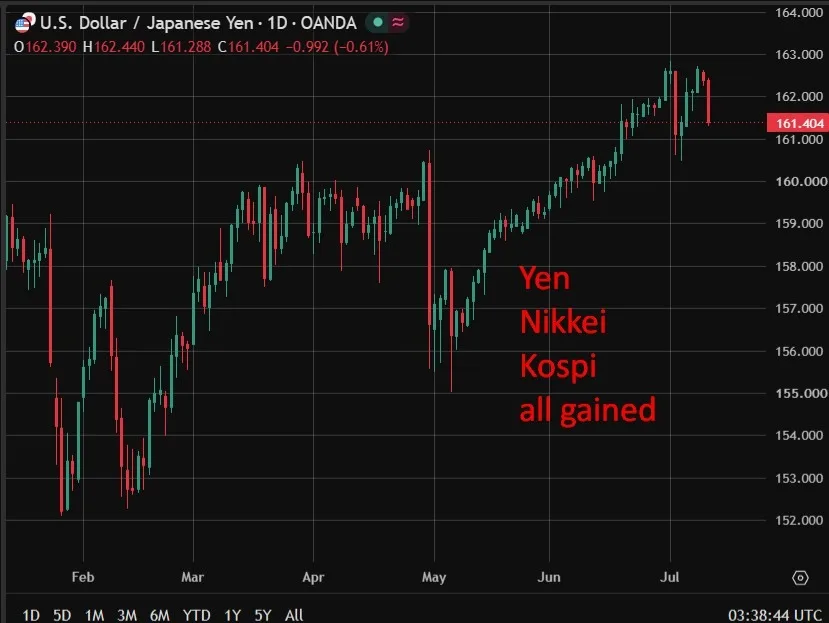
Asian markets closed broadly higher Friday as a confluence of forces — a semiconductor rebound, a surging yen, and cooling geopolitical risk tied to Iran-US nuclear talks — lifted investor sentiment across the region. Japan's benchmark indices led gains, while South Korean chip exporters bounced back sharply, pulling regional indexes along with them.
The yen was a standout mover after Japanese Finance Minister Katayama signaled Tokyo's intent to push the Government Pension Investment Fund and other domestic pension managers toward Japanese assets, including Japanese government bonds. The currency extended gains following those remarks, with market participants interpreting the move as a potential catalyst for large-scale domestic capital repatriation. Japan's producer price inflation also came in hotter than expected, rising 7.1% year-over-year in June 2026 against a forecast of 6.8%, reinforcing expectations that the Bank of Japan remains on course to hike rates further.
Read more Pelosi and Trump Share Stakes in the Same 10 Stocks →
Oil prices held steady in narrow ranges, with no fresh escalation in the Middle East after earlier strikes rattled energy markets this week. Citigroup maintained its $75-per-barrel Brent base case for the third quarter, citing progress in US-Iran diplomacy and the prospect of the Strait of Hormuz remaining open to shipping traffic. A US official confirmed that nuclear talks with Tehran would continue, further dampening the risk premium embedded in crude prices.
South Korea separately flagged that the won remains misaligned but expressed confidence that relief would materialize in the second half of the year. China's central bank set its daily yuan reference rate at 6.7989, slightly weaker than model estimates. On the global sovereign-wealth front, a separate report noted that such funds are pivoting toward national-priority investments, with AI-related spending hitting $404 billion. OpenAI also drew attention after reports confirmed that executive Simo would permanently step down, adding uncertainty to the company's IPO timeline.
Continue reading at Forexlive.