Figma vs. IBM: Revenue Growth Signals What Investors Need to Know
A look at what contrasting revenue growth trends reveal about Figma's momentum and IBM's AI-era positioning for investors weighing both stocks.
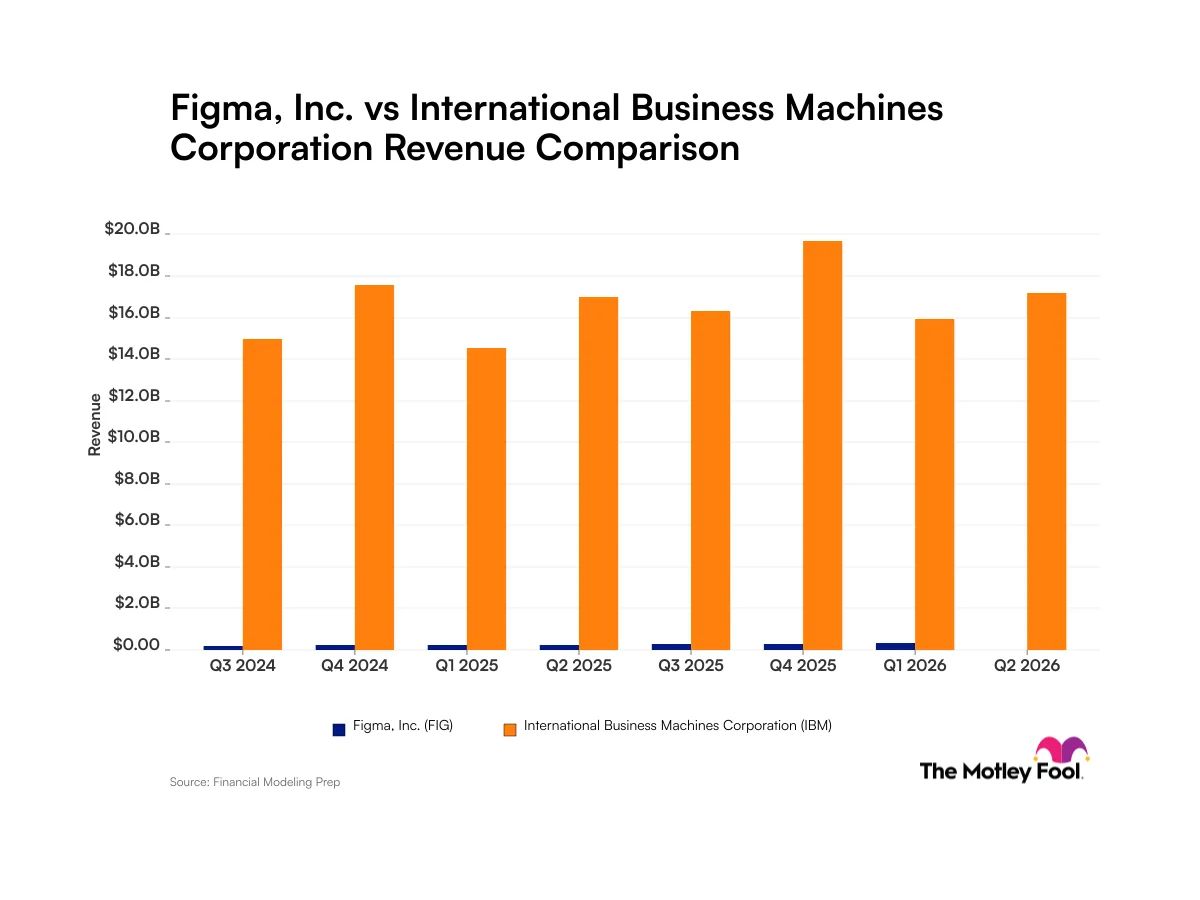
Figma, the fast-rising software design platform, and IBM, the century-old technology conglomerate reinventing itself around artificial intelligence, represent two starkly different bets for investors tracking the enterprise software landscape. Revenue growth trajectories at each company offer a rare side-by-side lens into how a young disruptor and a seasoned giant are navigating the same competitive market.
Figma has built its reputation on collaborative, browser-based design tools that captured the attention of product teams worldwide, positioning the company as a dominant force in the creative software niche. Its growth story is rooted in rapid user adoption and expanding enterprise contracts, the kind of momentum that typically commands a premium valuation multiple in the current market environment.
Read more Nvidia, AMD, Intel: Who Led the AI Chip Race in Early 2026? →
IBM, by contrast, brings decades of enterprise relationships and a sprawling portfolio that spans consulting, cloud infrastructure, and increasingly, AI-powered automation. The veteran firm has leaned hard into its watsonx AI platform as a vehicle for revenue renewal, betting that blue-chip clients will pay for trusted, secure artificial intelligence deployments rather than chasing newer entrants.
For investors, the central question is whether Figma's growth rate justifies its valuation compared with IBM's steadier, if slower, revenue cadence. Growth-stage software companies like Figma typically prioritize top-line expansion over near-term profitability, while established players like IBM are measured more on margin stability and cash generation. The two profiles appeal to fundamentally different risk appetites, making a direct comparison more instructive than competitive.
Understanding where each company sits on the revenue growth curve — and what catalysts could accelerate or stall that trajectory — is increasingly essential as AI reshapes enterprise software spending priorities across every sector. Continue reading at Yahoo Finance.