Oil Jumps 3.5% as US-Iran Conflict Shuts Strait of Hormuz
WTI crude surges to $73.90 as US-Iran strikes continue and Hormuz traffic halts. Markets brace for US CPI report later this week.
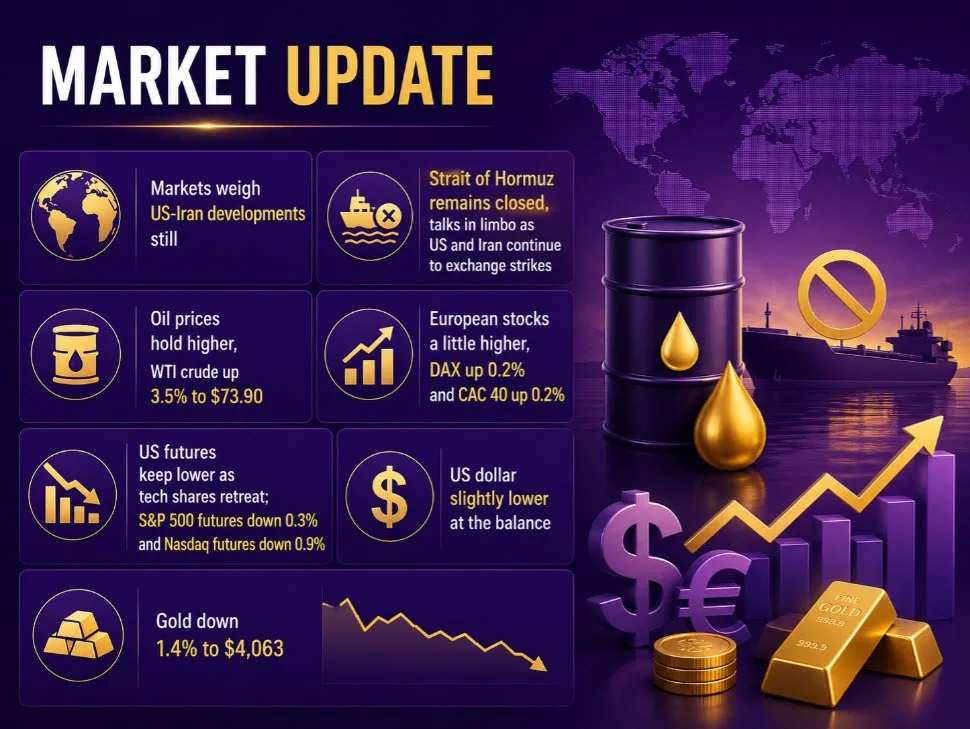
Oil markets surged Monday as escalating US-Iran hostilities shut down traffic through the Strait of Hormuz, pushing WTI crude up 3.5% to $73.90 during European trading hours. Both sides continue to exchange strikes while diplomatic talks remain stalled, leaving energy markets on edge at the start of a pivotal week for global investors.
Iran reaffirmed it will not honor its obligations under any existing agreement unless the United States does the same, while Tehran's foreign ministry acknowledged that third-party mediators are still actively working to de-escalate the standoff. The dual signals — defiance paired with back-channel diplomacy — have done little to calm commodity traders who are watching the world's most critical oil chokepoint remain effectively closed.
Read more TSMC Posts 68% Revenue Surge in June Ahead of Q2 Earnings →
Beyond crude, the broader market mood tilted cautious. S&P 500 futures slipped 0.3% while Nasdaq futures dropped 0.9%, with tech shares leading pre-market declines. European equities managed modest gains, reflecting relative calm compared to US futures. Gold fell 1.4% to $4,063, and Bitcoin shed 2% to $62,863 as some investors rotated toward cash rather than traditional safe havens.
Currency markets showed a slight easing of the dollar's safe-haven bid. EUR/USD climbed from 1.1400 to settle near 1.1430, and GBP/USD stabilized around 1.3390 after paring early losses. USD/JPY pulled back to 162.10, with Japan's Government Pension Investment Fund portfolio commentary adding a secondary layer of volatility to the yen. Ten-year Treasury yields edged up one basis point to 4.579%, hovering near recent highs.
Looking ahead, attention will increasingly shift to the upcoming US CPI report, which Federal Reserve Governor John Williams flagged as critical — stating he would support rate hikes if monthly core inflation averages above 0.2%. For now, however, Middle East risk remains the dominant market driver. Continue reading at Forexlive.